
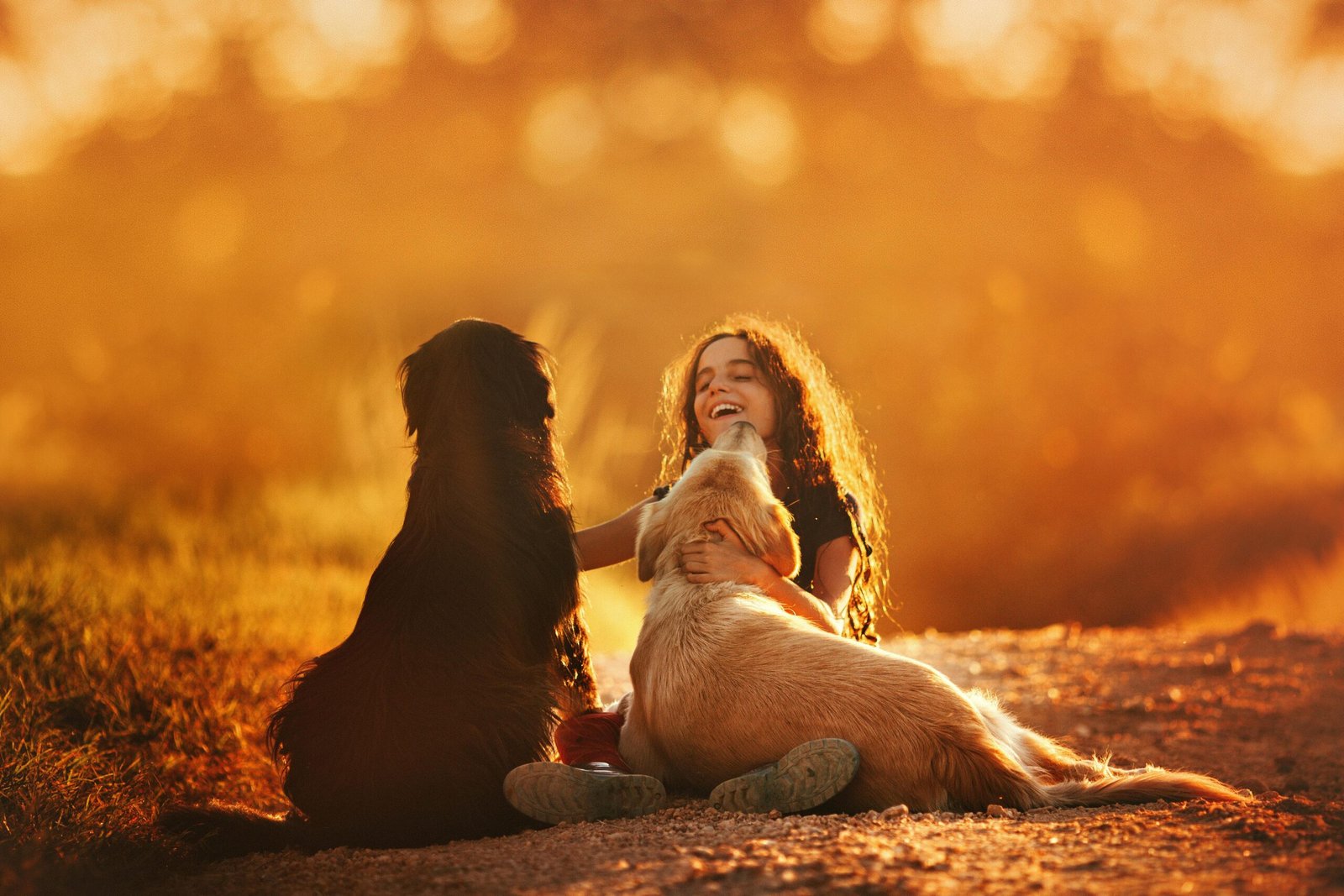
Why do dogs love us unconditionally? It’s a question sparked every time your dog greets you like you’ve been gone for years, or curls up next to you simply because you’re there. Dogs don’t love partially — they love fully, freely, and without conditions. But what drives this incredible devotion? In this article, we’ll uncover what “unconditional love” really means in canine behavior, and why dogs form such profound, lasting bonds with humans.
Table of Contents
What Does “Unconditional Love” Really Mean in Dogs?
Unconditional love, in human terms, means affection without limits or expectations — love that persists no matter what.
For dogs, this idea translates into pure loyalty, emotional presence, and consistent affection. They don’t care what we look like, how successful we are, or what mood we’re in. Their love is expressed through actions — waiting by the door, wagging their tails when they see us, or resting their head on our lap when we’re down.
Dogs may not experience love in exactly the same way humans do, but their behaviors and emotional cues show a deep, instinctive attachment that mirrors the essence of unconditional love.
The Science Behind Why Dogs Love Us Unconditionally
The secret lies in oxytocin, often called the love hormone.
Both humans and dogs release oxytocin when they look into each other’s eyes — a hormonal reaction similar to what happens between parents and children.
MRI studies have shown that dogs’ brains light up with joy when they smell their owner’s scent, confirming that the connection is chemical as well as emotional.
This biological feedback loop explains why your dog seems happiest simply being near you. Love, quite literally, feels rewarding for them.
Evolutionary Reasons Dogs Bond So Closely With Humans
Thousands of years ago, wolves began to form mutually beneficial relationships with humans — sharing warmth, food, and protection. Over generations, those wolves evolved into dogs that could read human expressions, emotions, and tones better than any other species.
This deep-rooted partnership shaped dogs into empathetic companions. Their survival and happiness became intertwined with ours, creating the foundation for the incredible bond we now enjoy.
How Dogs Show Their Unconditional Love
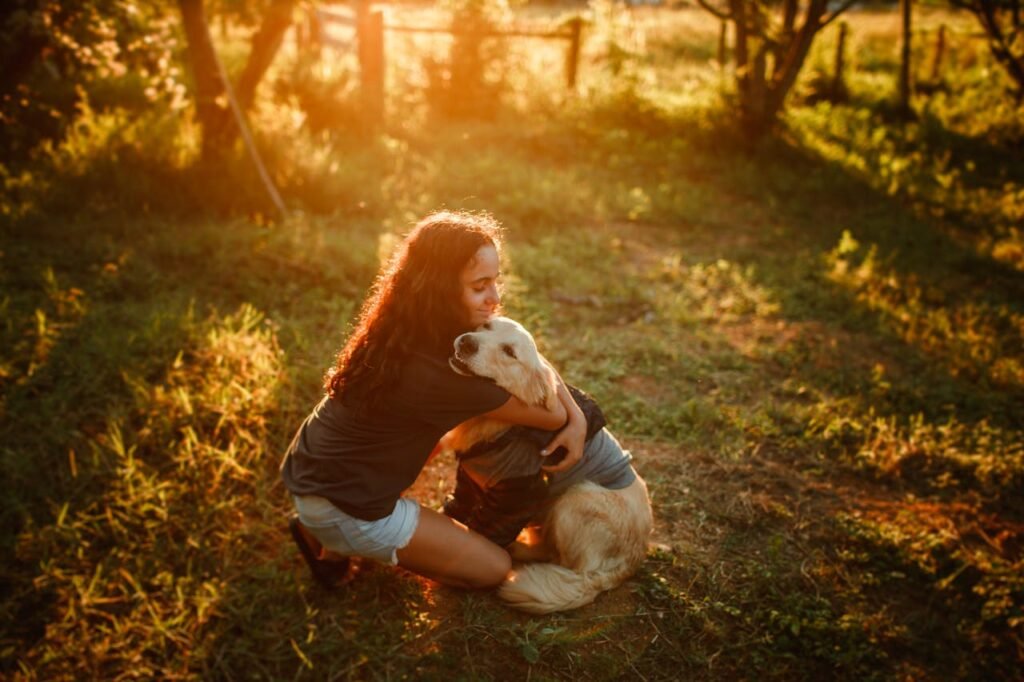
Dogs express affection in countless small ways. Some of the most common include:
- Following you everywhere: A sign of trust and attachment.
- Licking or leaning on you: Dogs show comfort and belonging through touch.
- Soft eye contact: Gentle, relaxed gazes release oxytocin in both of you.
- Tail wags and playful nudges: Signs of joy and social connection.
- Protective behavior: Standing between you and perceived danger reflects devotion, not dominance.
These everyday gestures are your dog’s way of saying, “You are my family.”
Do Dogs Love Us More Than We Love Them?
It might feel that way sometimes — and science partially agrees.
Studies show dogs display attachment behaviors similar to human infants: they seek proximity, feel distress when separated, and joy when reunited.
Dogs can even sense our emotions and adapt their behavior — comforting us when we’re sad or mirroring our excitement.
The emotional benefits are mutual, though. Dog owners often experience lower stress, less loneliness, and higher oxytocin levels just from interacting with their pets. The love we give returns tenfold.
Misconceptions: Is It Really Love or Just Dependency?
Skeptics often argue that dogs “love” us because we feed them. But research says otherwise.
Even when offered food from a stranger, dogs still prefer the voice and presence of their owner.
This suggests emotional connection, not dependency.
Canine emotional intelligence allows dogs to interpret tone, body language, and subtle expressions — meaning their love isn’t transactional. It’s relational. They love because it’s in their nature to connect.
Strengthening the Bond With Your Dog
The bond between you and your dog thrives on trust, consistency, and communication.
Here are a few ways to deepen it:
- Be consistent: Routine builds security and confidence.
- Use gentle tone and touch: Dogs respond to calm, positive reinforcement.
- Engage in interactive play: Fetch, training, or hide-and-seek build trust.
- Exercise together: Walks release oxytocin for both of you.
- Make eye contact: Those soft gazes strengthen emotional ties.
A dog’s love may be unconditional, but it still blossoms with attention and care.
Recommended Products to Deepen Your Bond 🐶
If you want to nurture that bond and make your dog’s love-filled life even happier, here are some tried-and-true essentials worth exploring:
For Dogs
- 🛏️ Calming Dog Bed: Helps your pup feel safe and reduces anxiety — perfect for relaxation after bonding time. If you’re looking for a bed that truly supports your dog’s comfort and emotional well-being, check out my detailed review: “A Good Dog Bed for Golden Retrievers: My Review of the Great Furhaven Sofa Bed in 2025.”
- 🧩 Puzzle Feeders & Enrichment Toys: Encourage mental stimulation and prevent boredom while reinforcing positive focus on you.
- 🦴 Natural Chews or Treats: Great for reward-based bonding during training sessions.
For Dog Owners
- 🎥 Dog Camera (Two-Way Audio): Stay connected when you’re away — your dog hears your voice and feels comforted.
- 🐕 Hands-Free Leash or Running Belt: Ideal for walks, hikes, or runs that strengthen both your bodies and your relationship.
- 📘 Positive Reinforcement Training Guide: Build trust through understanding and gentle correction techniques.
For owners who want to deepen the bond through play and learning, I suggest exploring this online brain training for dogs — it’s full of easy, engaging games that build confidence and obedience.
Each of these items supports trust, comfort, and communication — the very foundations of a dog’s unconditional love.
As an Amazon Associate, I may earn a small commission (at no extra cost to you) if you decide to make a purchase. all products I recommend have been tested by me and my Golden. Thank you for supporting my blog!
Why Dogs’ Unconditional Love Is Good for Us Too
Our dogs’ devotion doesn’t just make us happy — it’s good for our health.
Studies show that dog owners have lower blood pressure, improved heart health, and reduced anxiety levels.
Dogs also encourage more social interaction and physical activity, helping us live more balanced, connected lives.
Their love literally makes us better humans.
Final Thoughts: Why Do Dogs Love Us Unconditionally?
So, why do dogs love us unconditionally?
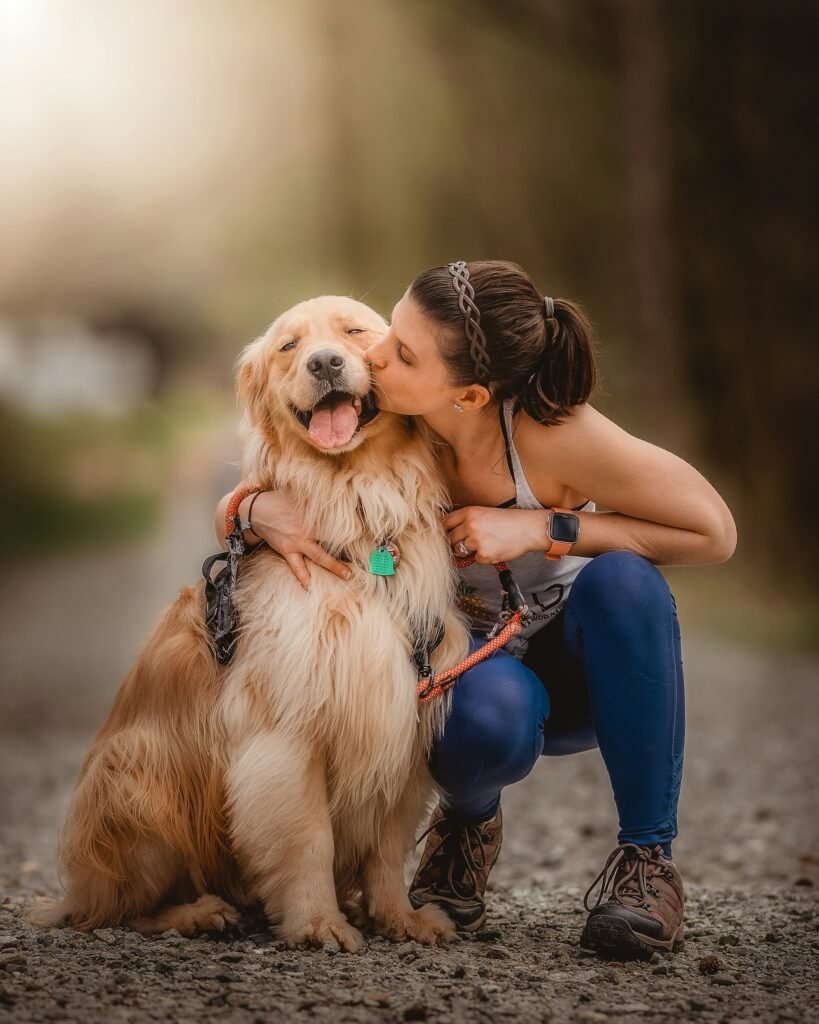
Because through thousands of years of shared history, emotional chemistry, and mutual trust, we’ve become their family.
Their loyalty isn’t based on need or habit — it’s rooted in a genuine emotional bond that science is only beginning to understand.
At the end of the day, your dog doesn’t care about your flaws, your mood, or your mistakes. They care that you’re there.
And in that simple truth lies the most beautiful kind of love of all.